Our Values: Imagination, Commitment, and Drive
With over 40 years of dedicated experience in seniors housing, Murphy Partners Seniors Housing Architects Inc. (MPI) possesses a proven track record in designing and administering a wide range of Seniors Housing projects including Seniors Apartments, Retirement Homes, & Long-Term Care projects. Our vision is Building Better Lives by Design: We believe in the ability of good architecture to improve the lives of those who own it, inhabit it, work in it – and on it. Our Mission is creating exceptional Seniors Housing communities that work for everyone: Residents, Staff, Operators, and Investors.
In this article, we will elaborate on our three core values: Imagination + Commitment + Drive
Imagination
We imagine that which does not exists, but could, to make lives better.
Architects are often treated as project designers and coordinators. Though we excel in these traditional roles, we also see ourselves as researchers and educators bringing new ideas and evidence-based, best practices forward for consideration. This is why the MPI blog is less concerned with our past projects and more focused on sharing information valuable to Seniors Housing Developers. We are engaged with the Canadian academic community through linkages with the University of Toronto and the University of British Columbia and organizations like the National Institute on Aging. As members of the Centre for Health Design, we have access to a wide range of thought leaders and research. MPI’s Project Architect, Rotem Yaniv, is regularly invited to U of T’s Healthcare and LTC- focused thesis reviews. Rotem was also asked to present a webinar for U of T’s IHPME on salutogenic and pathogenic design in LTC homes.
Evidence Based Seniors Housing and Long-term Care Design
We follow best-practice standards, for example CSA Z8004:22, CSA Z2004:24. We understand the gap between minimum regulatory requirements of LTC homes and evidence-based designs because we frequently review case studies from Canada and around the world. Everyday, we look for opportunities to expand our knowledge and experience to improve our projects and to create Canada’s most vibrant senior’s homes and communities.
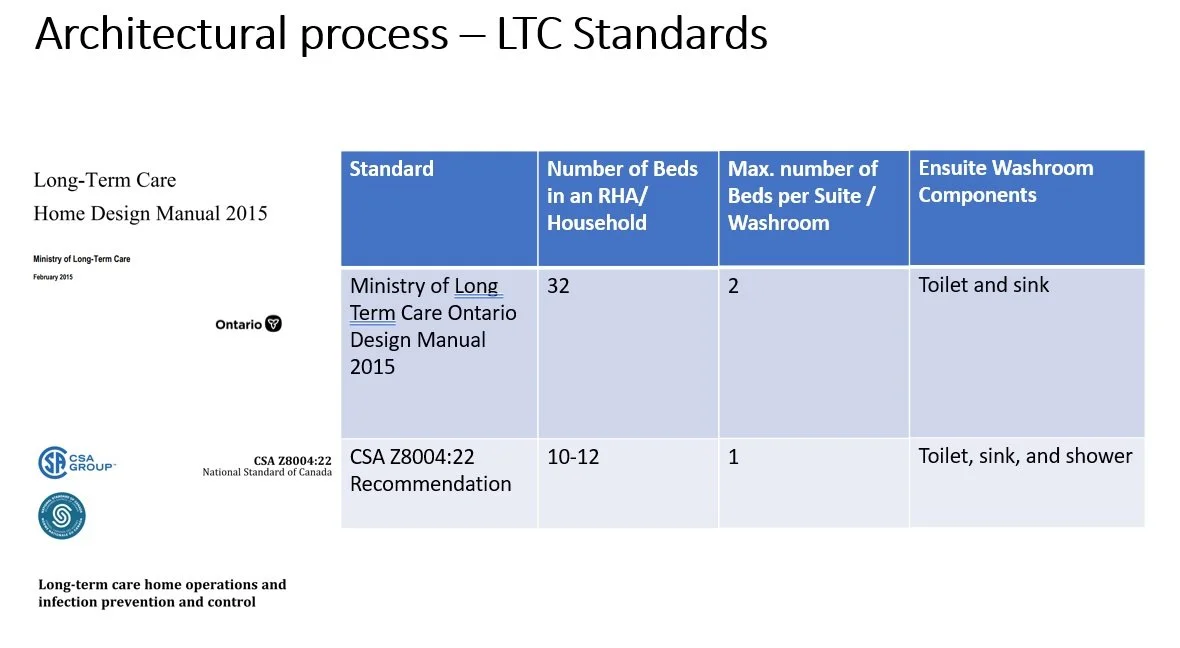
Slide from Rotem Yaniv's lecture at U of T's IHPME: Between a Rock and a Hard place – Designing Homes for Older Adults
Person-Centered Philosophy
We believe in giving residents greater independence, autonomy, and sense of selfhood through architectural design. We strive for innovative, functional, and compliant LTC environments that enhance resident quality of life. This includes implementing, when possible, research-based design principles (e.g., CSA 8004:22, CSA 2004:24) and integrating features like small home models, increased percentage of single-resident bedrooms, full washrooms, and accessible, safe outdoor spaces. For example, in one of our LTC projects, we transformed a building setback into a generous roof terrace. This promotes physical and mental well-being for all residents who will be able to enjoy being outdoors in an accessible, safe, and secured environment.
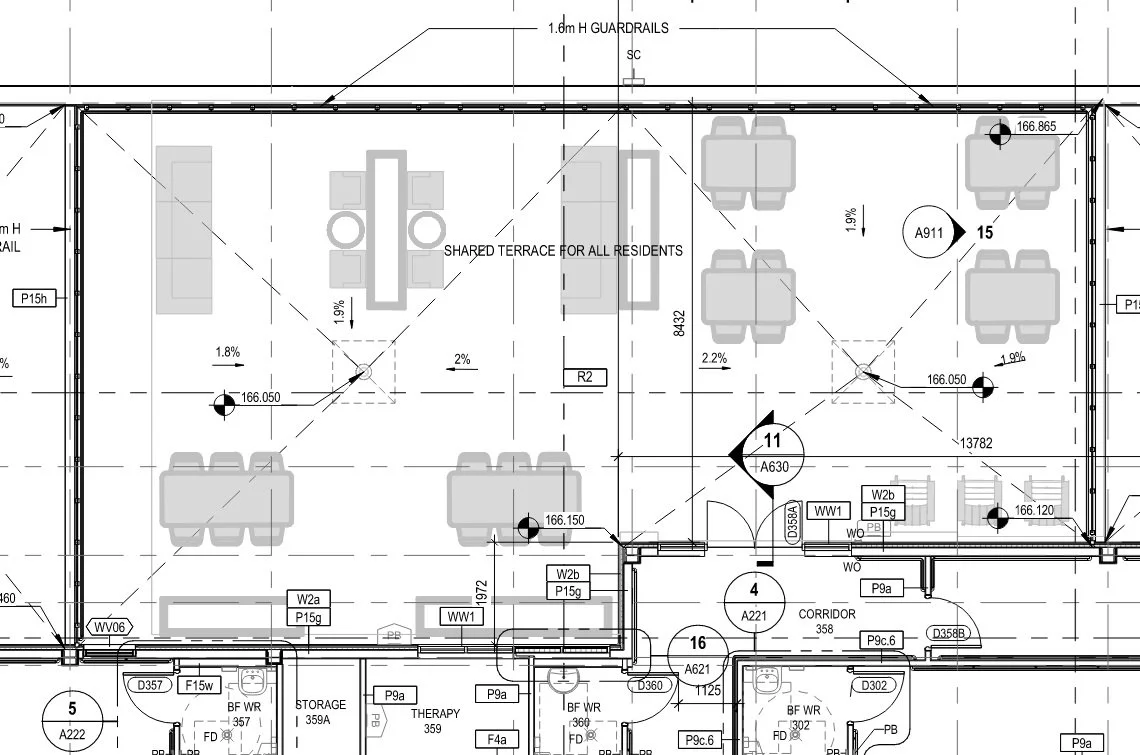
Shared safe and secured terrace in Murphy Partners’ design for a Long Term Care Home in Mississauga
We design spaces where residents move freely and safely with opportunities to stop and rest. For example, on one of our LTC projects, we identified an opportunity to provide a seating area next to a window in the middle of an RHA corridor while simplifying the structure and without increasing construction costs. On our Amica Taunton Retirement Home in Whitby, we located the Memory Care floor on the top level. This unconventional placement allows for raised ceilings, clerestory windows and skylights, and walkouts to spacious and secure terraces at each end of the hallway.
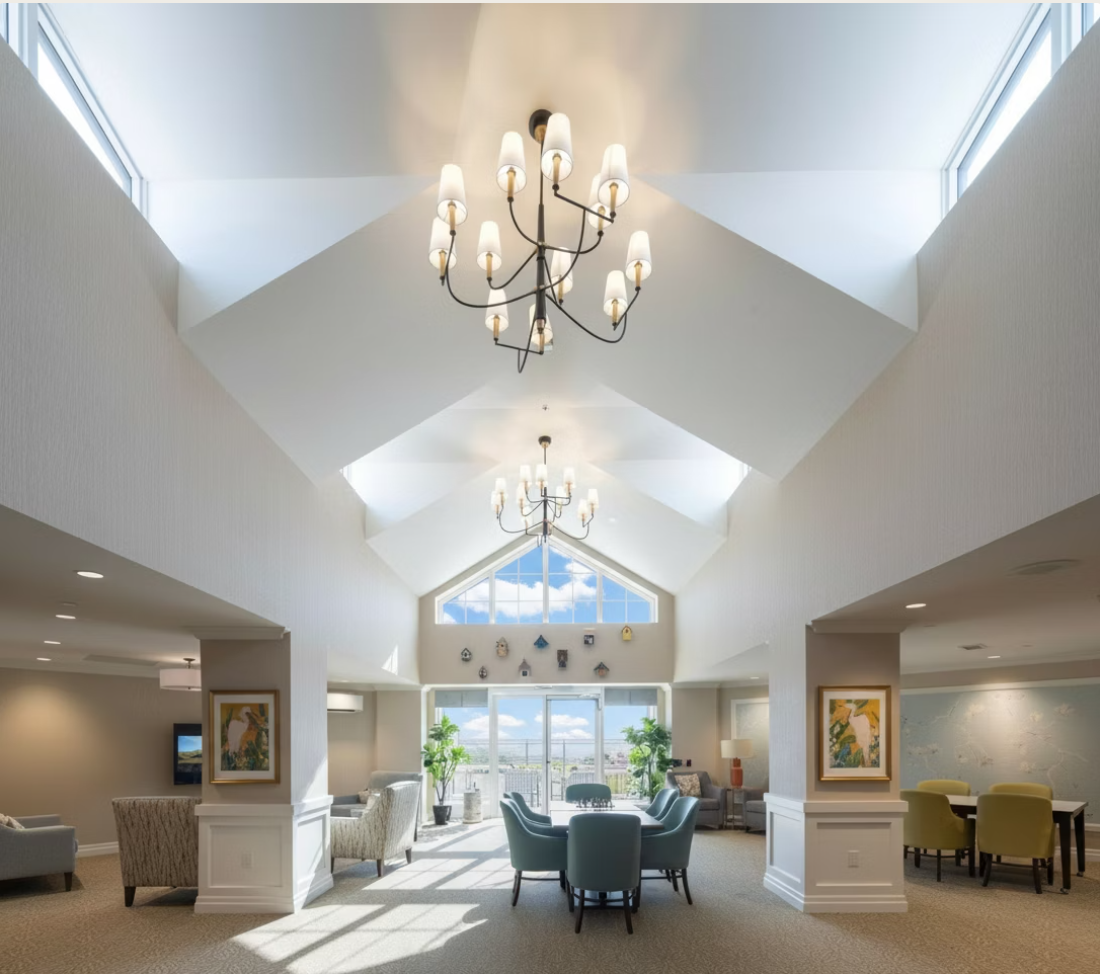
Amica Taunton at Whitby Retirement Home - locating the memory care unit on the top floor allowed for raised ceilings, clerestory windows and skylights, and walkouts to spacious and secure terraces at each end of the hallway.
Other features for Client considerations include religious and cultural practice accommodations, open concept spatial layouts that provide visual access, quiet zones, areas designed to increase social connection and promote social engagement, households that feel and function as “home”, activity kitchens, resident laundry, individual temperature and lighting control, circadian lighting concepts, family areas, horticulture, artwork, noise reduction, safe resident exploration with assistive technologies, and the inclusion of residents, families, care partners, and workers in the design process.
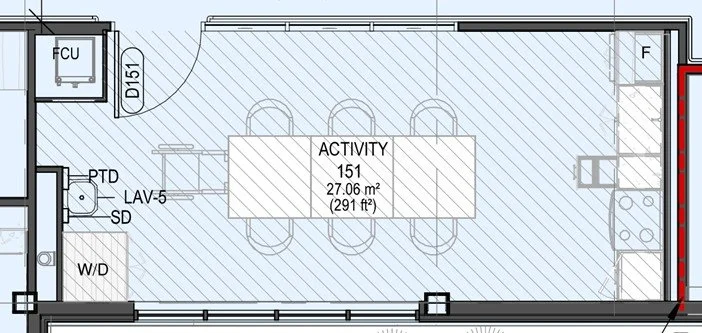
Activity Room in one of our Long Term Care Home projects in Mississauga with residential style kitchen and stacked washer/drier in cabinet
Commitment
We are committed to executing our professional duties with the highest integrity and skill.
Building strong, collaborative relationships is fundamental to Murphy Partners' success. Our practices are honed over 40 years of specialized experience and focus on transparency, proactive engagement, and shared understanding:
Value Alignment and Shared Vision
We actively seek partners who share our values and passion for service excellence.
We Listen First
MPI understands that one size does not fit all. Each project is unique often with different Clients, consultant team members, municipal authority, and existing site conditions. Before proposing ideas, we listen to what a stakeholder has to say. We then tailor our response to incorporate the unique features, desires and concerns of the community into each project.
Understanding and Adapting to Client Needs
We help Clients develop visions and goals specific to the project. We engage early and extensively with Clients to understand their specific goals, vision, motivations, model of care and challenges. This process helps us to discern what is a “nice-to-have” and what is a “must-have”, tailoring schematic designs to unique requirements. Our team has demonstrated remarkable adaptability, such as rapidly reconfiguring floor layouts mid-design development to meet Client-requested cost reductions and providing updated drawings on tight timelines to avoid construction delays. We know that Architecture is an applied art; we must apply a Client’s financial and human resources towards our art. We understand that trust is earned, not given.
For example, during the Design Development for the Port Stanley LTC project, Extendicare asked MPI to recommend one of two proprietary structural systems. Rather than provide a short qualitative response, MPI utilized quotes from each supplier as well as figures from a Cost Consultant report for the design to create a 5-page detailed breakdown of estimated costs for each system. This intense analysis was as close to “apples to apples” comparison as possible for two very different systems.
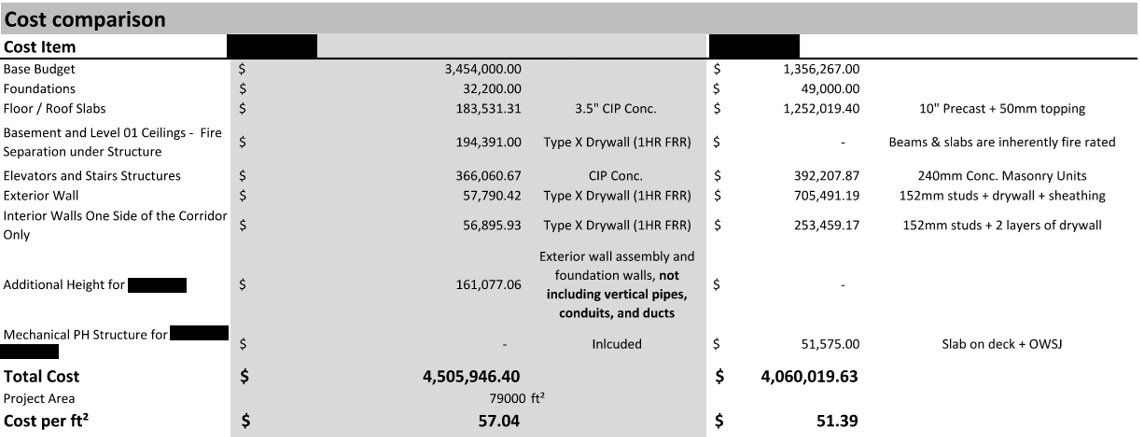
Page 1 of 5 for the cost comparison between two proprietary structural systems for Extendicare Port Stanley Long Term Care Home
For two of our LTC projects, we received a large package of Client Design Standards, mostly in the form of technical drawings and schedules. Our team translated this package into a checklist and provided due diligence at different phases of the design. Client Standards that could not be complied with or that MPI felt should not be complied with were shortlisted along with excerpts from the Architectural plans and presented to the Client for discussion and final sign off. This ensured that all Client requirements were either met or waived by the Client.
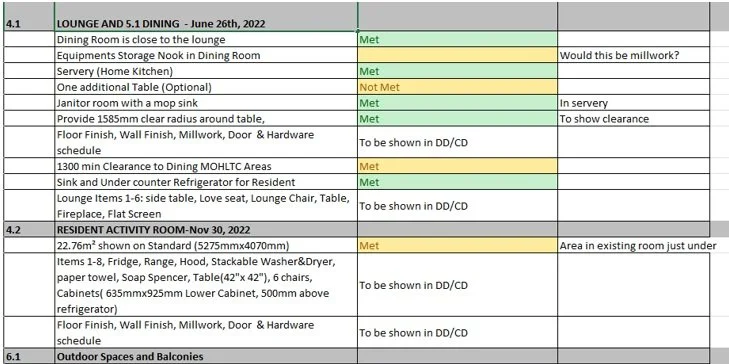
Client Standard Checklist developed by Murphy Partners Seniors Housing Architects for Quality Control
Proactive Communication and Problem Solving
Robert Murphy, as Principal Architect, is personally engaged in every project. He attends all Client meetings, is copied on all project-related emails, and proactively resolves small issues before they become big problems. This continuous, hands-on involvement fosters trust and efficient, informed decision making.
Sustainability and Long-Term Value
Our designs prioritize sustainability and energy efficiency from the outset. We integrate strategies in collaboration with M&E and Building Science experts to maximize energy performance and reduce environmental footprint. This focus on durable, energy-efficient building enclosures ensures long-term value and operational efficiency.
For example, one of our LTC project includes the renovation of an existing LTC home to meet new MLTC requirements. Our design proposes to improve the energy efficiency and longevity of the existing exterior walls by adding insulation outside the structure and replacing the existing brick facades, going above and beyond minimum regulatory requirements. To help the Client make their decision, MPI analyzed gas and hydro costs from the previous 3 years and created a rough estimated cost reduction if improvements were made to thermal performance. In addition, MPI created a detailed analysis of the risks associated with water penetration, ice build up, thermal expansion and contraction, mold and mildew, and efflorescence.
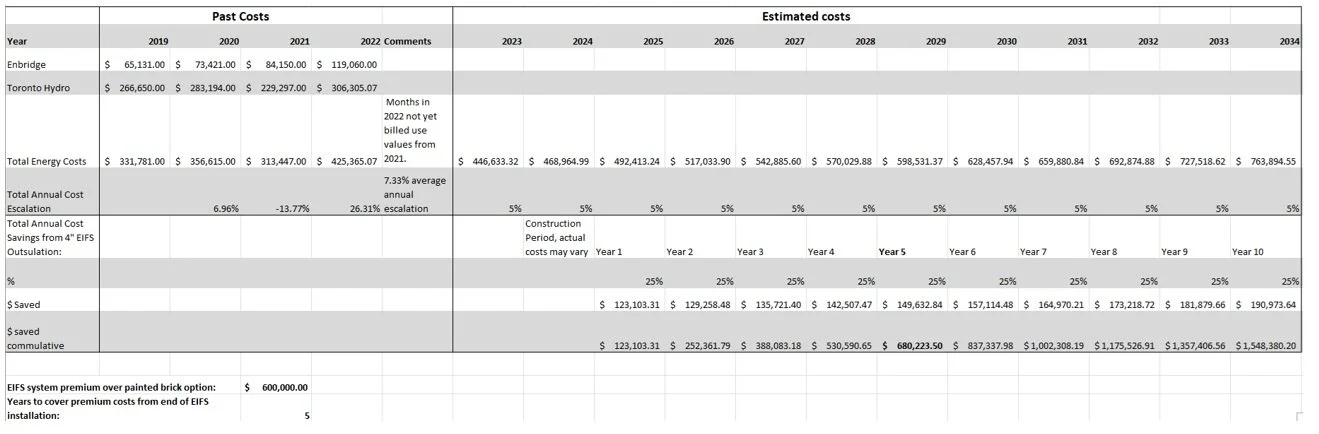
MPI’s Energy costs escalation estimate to demonstrate long term savings and the time to cover capital costs of adding EIFS on existing facades
Drive
Our passion drives us to exceed the expectations both of others and of ourselves.
MPI follows a “gung ho” approach – our team first understands goals and requirements and then sets out to achieve them no matter the challenges. In one LTC project, following an expedited design process, the initial tender price came in 7% higher than the Construction Manager’s latest cost estimate. MPI worked with the Client, Construction Manager, and design team (Arch. Mech. Elec. and Struct.) to make hard decisions and cut over 2 million dollars from the project scope to meet the Client's budget. MPI provided updated sets of drawings reflecting the change in scope in a tight timeframe to avoid delays to construction. As a result, the Client and Ministry of LTC approved going ahead and construction started as planned.
On another LTC project, the Client made significant design changes in a late stage of the design as well as replaced the Construction Manager. The Client then requested that the original project schedule be maintained without additional time to complete the extra work or account for outstanding questions for the CM. On the next Client Meeting, MPI announced – “we will send you the milestone packages on time and it won’t even cost you, all you need to do is sign off on the following coordination items to avoid delay”. The Client signed off on items that have been outstanding for weeks or months and MPI carried on with the work and met the original schedule target dates.
Below is an example of MPI and our Consultant Design Team’s review of a cost estimate. We provide a line by line review to find discrepancies between CM or QS’s budgets and the proposed design. Capturing these discrepancies before tender allows for more relaxed conversations with Clients and CMs about what to include or not include in the scope of work. This and other standard processes at MPI are driven by our passion to get the job done and deliver great Seniors Housing buildings.
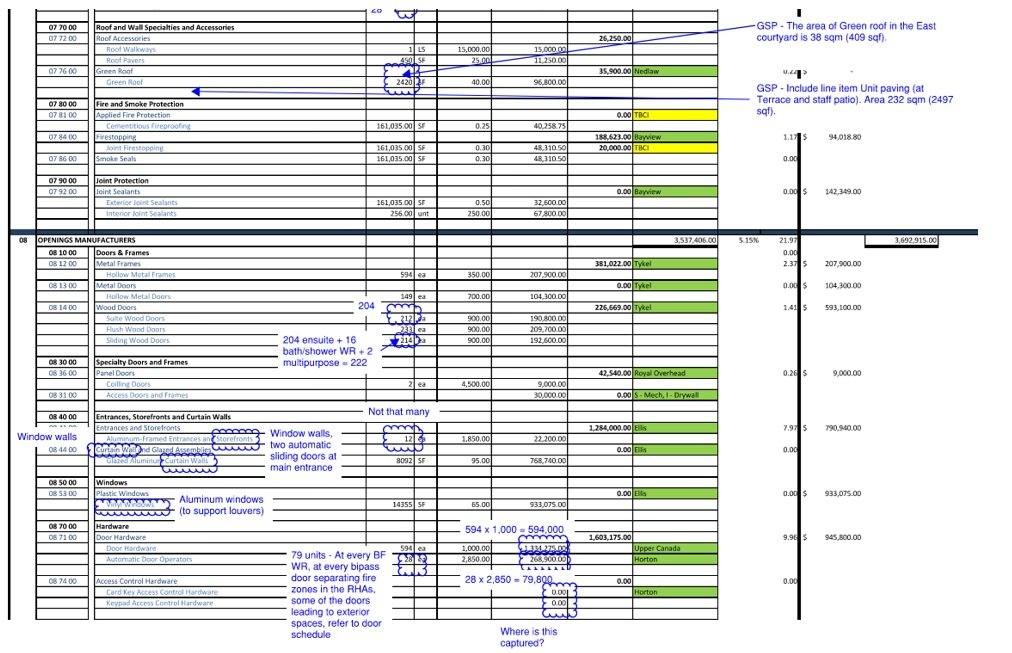
Cost Estimate (by others) analysis by Murphy Partners Seniors Housing Architects
Personal Connection to Seniors Housing
Murphy Partners exists beyond the mere delivery of projects because our work is fundamentally driven by a deep, personal passion for enhancing the quality of life for seniors. Our existence is rooted in a lifelong commitment to "get it right" in the homes we design and deliver. This stems from Robert Murphy's extensive lived experience with family members across all levels of care. A deep understanding of dementia and the processes of normal aging is foundational to the work we do.

Bob Murphy and Robert F. who flew ammunition to the Allied troops fighting in the mountains in Burma. Robert took the controls after they were safely aloft and proved through a series of deft moves that he still had “the Right Stuff” decades after his last flight.
Our Vision
Our firm's Vision is Building Better Lives by Design. This goes beyond architectural drawings to a core purpose of making a tangible, positive societal impact. For example, during the Predesign phase we carefully consider the qualities of “place” by researching the unique history, background and culture of each community. In addition, Focus Group meetings help to draw out concerns and ideas and start the process of knitting the new home into the fabric of each community. Trends in LTC design include intergenerational spaces such as daycares, playgrounds, afterschool reading, music, and art programs, community gardens and partnering with local dental schools to run oral care programs. Cafes, libraries, and gardens can create interstitial spaces outside RHAs that draw neighbours and visitors in to engage with residents, staff and families in a safe and secure environment.
Charity Work
Our drive is further demonstrated through our charitable fundraising efforts, prominently featured on our website's Giving Back page, where Robert Murphy personally donates charity flights with an emphasis on supporting seniors and veterans.
Our Mission
Our work is driven by the unwavering belief that design can profoundly improve lives and that every senior deserves to live with dignity and comfort in a place that is truly their home. The lasting impact we strive to make through our designs is to create exceptional seniors' housing communities that genuinely work for everyone: residents, staff, operators, and investors.
Does Your Company Own a Site It Wants To Develop / Renovate But Is Not Sure Of The Best Seniors Housing Option and Does Not Want To Commit To A Full Architectural Contract?
You just want to know the basics:
Rough idea of the number of suites and average size
Rough idea of gross construction area
Rough idea of the number of parking spaces
Analysis of existing building compliance to code and other mandatory standards
High-level zoning and code analysis to determine Planning Departments' paths forward
Which specialty consultants and reports are needed? (e.g. Noise, Environmental)
Murphy Partners can provide a low-commitment Client Needs and Options Review for your site to determine the above. Contact us to schedule an initial consultation to discuss your next project.
If you enjoyed this content and wish to receive notifications of future articles, please subscribe to our newsletter.
Subscribe now to get our Site Plan Application Toolkit (you will be taken to a download location following a successful subscription). Sign up to receive news and updates.